• There is no sincerer love than the love of food – George Bernard Shaw. 

    Curry Mile – I’m no expert photographer – but I do not think the Curry Mile offers the best photo opportunities.

    I lived in Manchester during Covid but eventually moved back to my hometown when restrictions were lifted a little. It was a rough time! I then moved on to a couple of different places before eventually finding my way back to Manchester a few years later. I lived very close to the Curry Mile the first time I was here, and this was somewhere I visited when we were allowed our little bit of outdoor exercise.   
    Visiting it during that time was obviously a completely different experience to visiting it today, what with various restrictions in place and only being able to take out food.   

    I visited again for the first time since returning to Manchester, as I had noticed it was in the book. There are a few occasions where I have already been to the places mentioned, but I have decided that to tick them off, I must visit them properly again. This time round, I got to sit inside a restaurant and enjoy my meal too.   
    The Curry Mile does not present many solid photo opportunities (apart from maybe the food itself). It is just a long row of different restaurants and shops, and there are a lot of road signs, a lot of traffic, and big crowds. It could have more potential in the early mornings when it is quieter, but you will not get the same aesthetics here as you will on some of the parks and architectural entries on the list.   

    The book informs us that the Curry Mile used to boast the biggest concentration of South-Asian restaurants outside the Indian subcontinent, but this is no longer the case. This is partly due to some establishments closing and being replaced with Turkish Barbers, Supermarkets, Shisha bars, etc. The book also cautions visiting the area after 1am to avoid drunks looking for an end-of-night take-away.  (Treuherz, J. and Figueiredo, P. 2024). It is a shame that it lost the accolade for most South-Asian restaurants, as this would have been a better niche. Having a mix of everything else makes it lose its uniqueness and blend in well with the rest of Manchester. Some of these places do have character, however. The supermarket with the outdoor fresh fruit and veg is always a pleasing sight, but you do not have to search far in Manchester to come across one of these. I used to live less than a five-minute walk away from two.   

    A point of contention is the potentially misleading name. Some suggest the Curry Mile is not actually a mile long. (Gottlieb, O, and Rizvi, M. 2025). (Scandalous!) TripAdvisor is also unforgiving. As I write this, the Curry Mile currently has a 2.3-star rating. John is absolutely fuming with his experience with the lack of curry options and young people driving around in BMWs. Worth mentioning that the food places on the mile generally have a good rating, and who goes out of their way to leave an area a review on trip advisor? Only seven people at the moment, so not too damning. Had a peek at Reddit, and it is mixed. A lot of complaints about the changes to more shisha bars & other shops instead of the actual curry places, complaints about congestion (traffic & people), and poor aesthetics too, which vindicates my previous opinion. (I’m being polite here; the people on Reddit said it was a shit hole.)   

    What to eat.

    Despite the complaints surrounding the lack of Curry houses, there is still a good selection of eateries still to try and there is a variety of pleasant aromas to tingle your senses, walking down the short stretch. It is a busy area, and a lot of them did seem busy when I visited. I did want to try Mughli Charcoal Pit or Al Jazeera, but I opted for Chit ‘N’ Chaat – an Indian street food.   
    I ordered a ginger chai and a sparkling water. (I always go still over sparkling). I do tend to get an alcoholic beverage when I eat out, but I decided the ginger chai looked interesting. It was nice! Earthy, punchy, refreshing! Would have been nice with a shot of vodka, mind..   
    I think even if I wanted alcohol, they may not serve it here. At the time I went, I was not going to get a drink anyway, but now I’m looking back at the menu and can’t see an alcohol option. Possibly just don’t have it on the main menu, but worth checking if you are big on having a pint with your curry.   
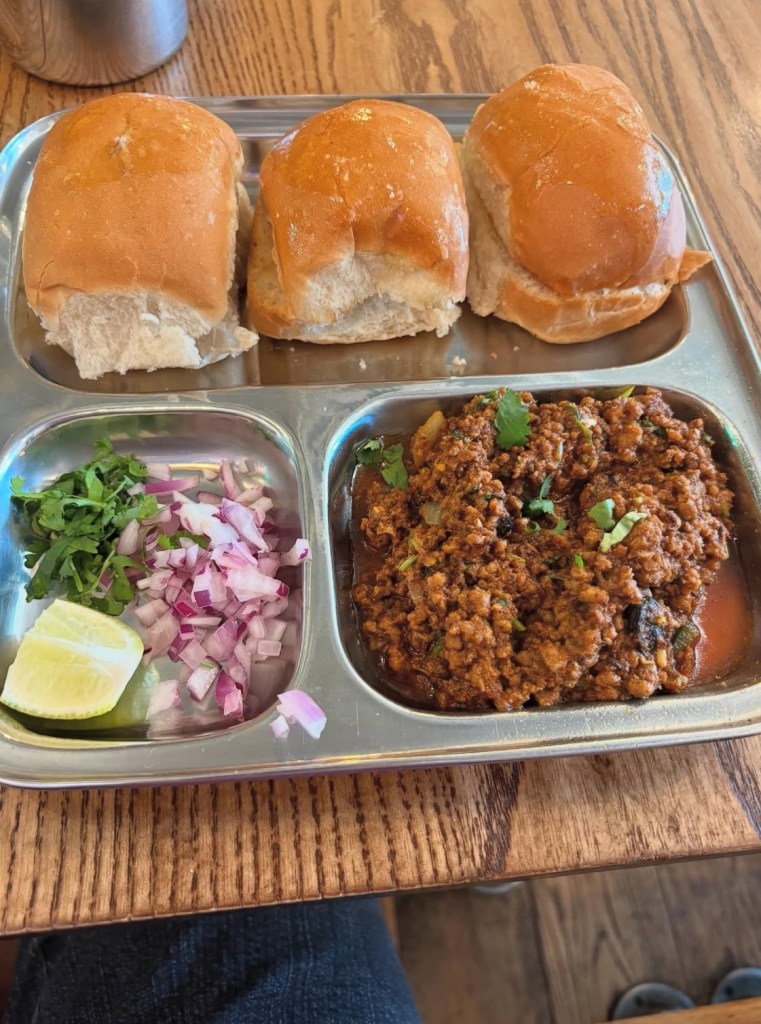
    For food, I got a Keema Pav. From the menu: “Spiced lamb mince curry served with x2 buttered pan-fried brioche buns.” It also had a little side of onions, some green stuff (coriander?), and a lemon wedge. I love mixing my foods. When I have a full english, I get a bit of sausage, a bit of beans, a little bit of egg, and toast, and shove it all in my mouth at once. Man of flavour, I am. Growing up, I had a brother who was the opposite and hated his food to touch. If it touched, he refused to eat it, then I could have extra food.   
    The Keema Pav was delicious. I do wonder if I played a bit safe and maybe I should have tried something more daring to enhance this 111 challenge a bit more, but it was a bit of a spontaneous decision. I should plan more, perhaps. I could always go back, and I do intend to!   
    Perusing the menu of some of the other places – Mughli Charcoal Pit has a Scorpion Prawns dish on the menu, which sounds banging. (Albeit a bit pricey!) “Spiced, marinated and charred with tandoori masala, garlic oil and crushed black pepper with pickled red cabbage.” Yum! This, alongside an eclectic selection of curries & kebabs. I think I will make this the next Curry Mile place I visit. Maybe after I have done the full 111 challenge. There are some very expensive looking restaurants on the list that I still don’t know how I will pay for. They really did not consider the financially incompetent when compiling this list.   

    Conclusion & Ranking  

    I do agree with a lot of the criticisms of the Curry Mile. I want more curry. I want prettier photos and fewer take-out, cheap kebabs for the drunks. (We have plenty of those!) I do wish I could have seen this years ago, when it really offered more of a varied selection. But, I do like what I did try and do plan on trying more. I also think the Curry Mile is a big part of Manchester and its history. It is a quirky thing to have. I must try the Balti Triangle in Birmingham to compare.   
    Overall rating: POSITIVE. It is the weakest positive thus far, but it is still a positive for me. I like food, and I enjoyed my experience and will return. You should visit! 

    References  

    Gottlieb, O and Rizvi, M. (2025). “Not a mile and not much curry: things are changing on Wilmslow Road.” The Mill. Available at: https://manchestermill.co.uk/rusholme-curry-mile-is-changing/ Accessed 09/12/2025.  

    Treuherz, J. and Figueiredo, P. (2024). 111 Places in Manchester That You Shouldn’t Miss.” 4th edition.  
  • A dreaded sunny day 
    So I meet you at the cemetry gates 
    Keats and Yeats are on your side – The Smiths (1986)  

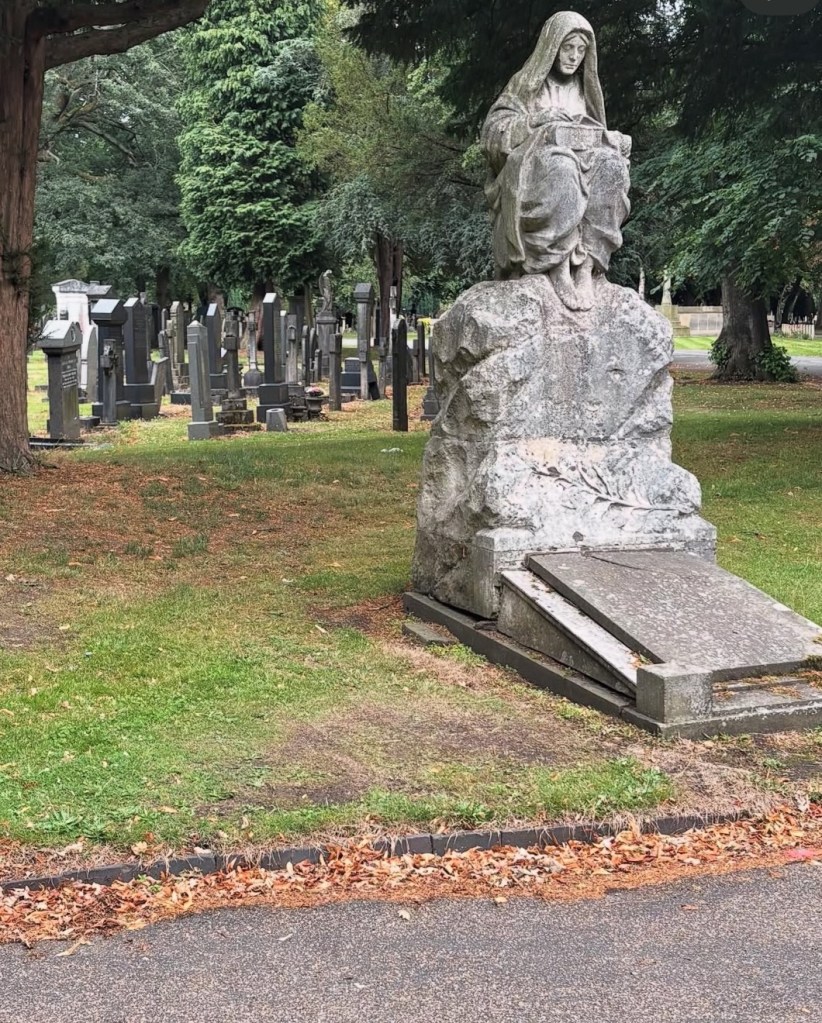
    I am a huge Smiths fan. Whatever you think of Morrissey, their music and his solo stuff is very good. I saw Morrissey live in Leeds, 11 years ago. I was 18 and vegetarian at the time. He played Meat is Murder at the concert, showing cattle being ruthlessly butchered, and then whipped his shirt off at the end. I still have the T-shirt I bought from the concert! It fits, even though I now eat meat…(Sorry, Morrissey!) It is a concert I remember fondly, and it got me into more of his solo stuff (along with the 1001 albums list), although I still prefer the Smiths’ albums. When I first bought the 111 Places book, I flicked through to see some of the first things I would do. If I knew what they were and where they were or if I already done them etc. This one, I had never heard of, but it piqued my interest. First reason, the idea of a cemetery being a place you should visit I found fascinating. Maybe it is morbid to say, but I do enjoy walking around a graveyard. (Not a hobby I put on my Tinder profile anyway). I do find they are both eerie and peaceful. They hold a lot of history and memories, which makes for a great experience if you can immerse yourself in it.   
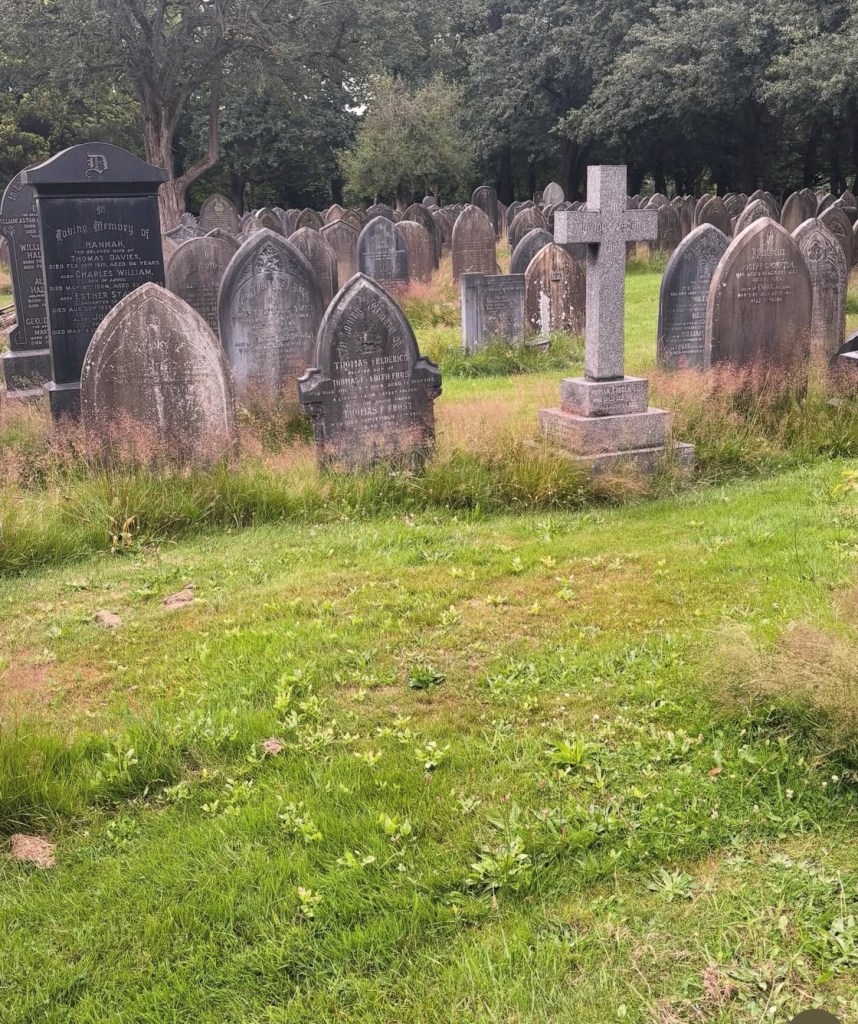
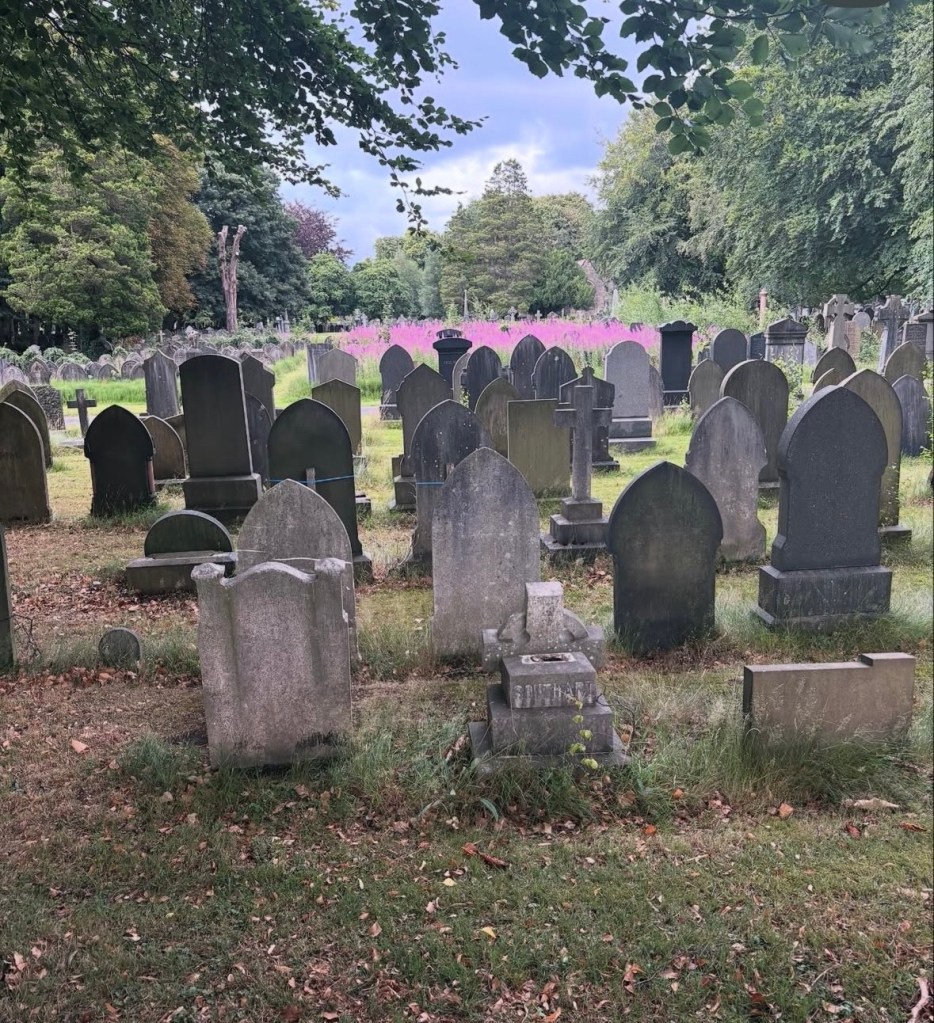
    Researchers have described cemeteries as documents of history, marking the final resting place of our ancestors and enabling us to glimpse into how they lived their lives. Through things such as different styles of tombstones, different vegetation, decorations, and flowers. (Brew, C, and Fawcett, T. 2006). Southern Cemetery is a great example of this, as it is so vast and has a large variety of different tombstones from different eras.   

    The cemetery was opened in the late 19th century and is the largest municipal cemetery in the UK. (Manchester City Council. Undated.) Buried here are some big names – Sir Matt Busby, John Henry Davies and L.S Lowry! (Murray, A. 2024). Fans of the Smiths may be disappointed to know that the names mentioned in “Cemetry Gates” are actually not buried here. (I was anyway!). But the sentiment of the song still stands.   

    I was worried, walking around the cemetery, about taking photos. I have taken photos of each entry from the list I have done thus far and created an Instagram post. I had reservations about doing that in a cemetery. Is it odd? Not sure what the etiquette is on posting photos of gravestones. I did do a google before I posted, and the “polite” rules were do not post if it is less than a hundred years old. Which is such a shame because now I can’t post the photos of all the dead celebrities I found..  
    I saw none – but, aside from the ones I’ve already mentioned, the book also mentions others such as John and Enriqueta Rylands, SIr John Alcock, Sir Ernest Maples, and Tony Wilson. (Treuherz, J, and Figueiredo. 2024). Not sure why Morrissey didn’t reference these in his song? Not as easy to rhyme, I guess.   

    I was also anxious about strolling along on my own through a graveyard, just..looking at stuff. The good thing about a challenge like this is that it gets you out of your comfort zone a bit as well as enabling you to visit and experience things you might not otherwise experience. On that note, this does get more difficult further down the list. If you wanted to do it alone, be warned that if you’re introverted that there are places like busy restaurants, a nightclub, and other things you would probably normally expect to do with a group. But I’m glad I am forcing myself to do it. The cemetery might be odder to invite friends. I wasn’t the only person in the cemetery either. Maybe there are others doing the challenge?! Or visiting loved ones..   
    I got over my anxiety a bit by sitting down on a bench near the entrance and reading the entry for the place in the book. (I differ in my approach to reading these; sometimes I read them before, sometimes after, or, like now, during the experience). I read the entry, put the book away, put my earphones on, and had a good little look around, taking the scenery in. There were a lot of options of different paths to take, and at the moment, I was pretty much in the middle of the cemetery. If you wanted to traverse the whole area, you could spend a good long while there. This is where I struggle sometimes, because I like to do everything there is to do, and when there is no clear direction, I always worry that I will miss something. I find this to be the case with some museums that are too open . (Like some in this list..)   
     

    The tale goes that Morrissey used to wander around the graveyard with his friend Linda Sterling and would invent stories about the people laid to rest there. (Treuherz, J, and Figueiredo. 2024). Is this a date? I can understand how someone would find a lot of beauty in a cemetery, especially one like this. I do think this place is visually and historically incredible. But I can’t imagine trying to get to know someone and just saying, “Oh well, there’s a really cool ‘cemetry” nearby, we could have a walk around there and make up some stories about some dead people we never met?”   
    It is strange, but I appreciate the poetry of it. Maybe nostalgia is a better word? Surely you can’t be nostalgic for something you never had or for someone you never met?  
    But there is a sense of connectivity to a different time.   
     

    I did not initially though that this cemetery was affiliated with Morrissey, but as I was flicking through the book, I was drawn to it. Some might find it strange that a graveyard would be something you “shouldn’t miss” in Manchester. The book itself describes it as the “least romantic in existence” (Treuherz, J, and Figueiredo, P. 2024). I take umbrage with this description. I thought it was a visually beautiful place. Maybe in an unusual way. The place is huge! And there are a variety of different gravestones dating back to a variety of different eras. Some are more showing signs of ageing, but there are others that are clearly being tended still today. I wonder what Morrissey would say if he saw this place described as unromantic?   
     

    Overall rating – Positive – You should visit. I know it’s a graveyard, but it’s cool! It is easier to take an experience from this place than the previous entry, the Peterloo Memorial. (Although I do really like that one too). My second reason I was drawn to this was the connection with Morrissey, which I had only learned from the book. 

    References 

    Brew, C and Fawcett, T. 2006. “Reading More Into Cemeteries”. Australian Guardian History. Vol 18(2). Available at: https://www.jstor.org/stable/44179346?searchText=cemeteries&searchUri=%2Faction%2FdoBasicSearch%3FQuery%3Dcemeteries%26so%3Drel%26efqs%3DeyJjdHkiOlsiYW05MWNtNWhiQT09Il19&ab_segments=0%2Fspellcheck_basic_search%2Fcontrol&refreqid=fastly-default%3A6ebb5b430dfb0b09dbe4cc6ab2de9fd3&seq=1 Accessed 09/11/2025. 

    Manchester City Council (Undated). “Manchester Cemeteries and Blackley Crematorium”.  Available at: https://www.manchester.gov.uk/info/200032/deaths_funerals_and_cemeteries/5099/manchester_cemeteries_and_blackley_crematorium/6 Accessed 05/10/2025.  

    Murray, A. (2024) “Walking with Ghosts: Southern Cemetery.” (2024). Available at: https://www.northernsoul.me.uk/southern-cemetery/ Accessed 05/11/2025.  

    Treuherz, J and Figueiredo, P. (2024) 111 Places in Manchester That You Shouldn’t Miss. 4th Edition.   

  • Last came Anarchy: He rode
    On white Horse, splashed with blood:
    He was pale even to the lips:
    Like Death in the Apocalypse.
    (Percy Bysshe Shelley – The Masque of Anarchy).

    When I undertook this challenge, I considered writing a blog post for each. I love writing and reading, so it felt like it would enhance my experiences even more to write about them too. Not that I would expect them to gain much in terms of viewership, but even if it is just something for me to look back on and reflect on my experiences. I mention this point because, as much as I like to write about things, it is certainly challenging to write about things like monuments and memorials when they do not involve as immersive an experience as some of the other entries on this challenge (like the Gaskell House on the previous post). Luckily, there is enough background to the Peterloo Memorial to be able to create enough for a post (I hope). I mention this now because it highlights challenges I will face in attempting to write to something about each of these entries. (I’m looking at you, Minut Men & the bloody Vimto bottle!). The Peterloo Memorial is situated very centrally. Take a tram to St. Peters Square and you are only a few moments’ walk to it. I used to take the tram into work from Old Trafford, so if you pass that way, you can see this memorial from the tram. Although I would recommend hopping off and going to see it in person.   
    I did this as my second endeavour on the book, and there was no real motivation behind this choice other than, I knew where it was and how to get there. At this early stage of the challenge, it was easy to pick off things to visit but this does get harder later. Whilst I knew what this was, I had never gone to visit it properly and appreciate the intricate desings or to really appreciate what it stood for. That is one thing I am thankful for when tackling this list is that I get to really experience these places.  

    It was a Sunday that I visited. I mention this because if you go on a Saturday, it will be heaving with crowds of tourists standing all over the monument, impeding any potential Instagram opportunities! Even on a Sunday, I was lucky to have it to myself, momentarily. When I got there, there was a group of people on every step, taking photos of the monument and themselves on each step of the monument. I sat patiently on a bench nearby and read until they left. This one does often have people on it or at least big crowds around it. Like I mentioned, it is very central. Even when I went by on the tram during the week, there were often people there. (Get a job!) (Just kidding!…) As much as I cast aspersions on the Minut Men earlier, I did not have this problem there.   

    I am no connoisseur when it comes to anything relating to design or architecture, or anything artsy at all, really. But I do think this memorial is very nicely designed. From a distance (like the tram), it looks like a round circle of steps leading nowhere in particular, but when you stand on it in person, there are various patterns and icons on each step. Interlocking hands, hearts, names of different places and people, etc. Variety of different colours happening here too, so it is a lot more pleasing to the eye up close.   
    It does feel like a good experience, standing on top of it and looking at the patterns across each step, and taking a photo of yourself on top. So, I can’t judge too harshly the people who made me wait my turn. (Was annoying though, move.)   

    From the book, you’ll learn that the monument was designed by a Turner Prize winner, Jeremy Deller. The names that are inscribed on the monument are the names of people who were involved in the massacre and the towns from which they came. The top of the monument also references other state attacks, like Bloody Sunday. The memorial has been created using different stones from across the country, with the colours being reminiscent of the demand for social reform. (Treuherz, J. and Figueiredo, P). Interesting facts I had not known before doing this challenge! (I do not claim to be an expert on these topics, though, i wonder if this is well known).  

    The Peterloo Massacre  

    The Peterloo Massacre occurred over 200 years ago, resulting in approximately 18 deaths and at least 650 injuries. (Cathain, M. 2019). The event took place in St Peter’s Square and reportedly involved over 60,000 protestors, fighting for liberty and freedom from poverty. (The Peterloo Memorial Campaign. Undated). The protest was intended to be peaceful with no weapons. There were masses of people with flags and different banners, with speakers that were eagerly awaited by the crowds. After a couple of hours of observing the scenes, overlooking magistrates ordered law enforcers to intervene, and the crowd were charged at by these men on horseback. (Hirsch, S. Undated). The event has a lower death toll than other “massacres” at the time, but is notorious since the event was a peaceful one, and it was deemed that the Yeomanry who attacked the crowds did so with enthusiasm. (Poole, R. 2019).  

    The Peterloo Massacre also crops up in other entries on this list. For example, the People’s History Museum (Listed as Banners of the People in the book) also cited above. The memorial could benefit from some more information around it. Some more placards with a few more details on the history on the event. I am yet to look into this, but I am sure there are probably tours in Manchester that include this memorial in their events. It is a very big part of Manchester’s history and easily accessible, so I would be surprised if this was not something that could be found easily. It was not something I had considered when I ticked this one off the list, but if I do find one and go back to it, I could also revise the post if I learn something more interesting!  

    The monuments became a struggle later for me. I am not a history buff. By far, one of my least favourite subjects when I was at school. I have an innate ability to remember useless facts, but trying to remember dates is impossible for me unless it has been drilled into me. Fine, I remember the Titanic sank in 1912! Moon landing – 1969! London 2012 Olympics, 2012! Mother’s Birthday, erm, May something..  

    Peterloo Memorial is an interesting one. The history is big to Manchester, and the structure itself is visually cool with nice designs on it. It is easy enough to get to and would not consume much time if you were on a short trip. It is an unusual experience to stand in the same square where the massacre took place 206 years ago (or 93 years before the Titanic sank). St Peter’s Square is still the main point where protests take place. But if protesting is not your thing, there is a Wagamama’s and a Starbucks you can enjoy instead.  

    There are some more challenging monuments on this list and some other interesting ones! No spoilers yet. But Peterloo was a solid one to start with. I do prefer entries on the list, like the Gaskell House I started with, that involve more of an experience, but I think this one deserves its spot.


    Peterloo Memorial – Overall rating – POSITIVE – Should see. 

    References 

    Cathain, M. (2019). “Peterloo – An Irish Tragedy?” History Ireland. Vol 27 (4). Available at: https://www.jstor.org/stable/26853083?read-now=1&seq=1#page_scan_tab_contents Last accessed 02/11/2025.  

    Hirsch, S. (Undated). “Protest and Peterloo: The Story of August 1819.” People’s History Museum. Available at: https://phm.org.uk/protest-and-peterloo-the-story-of-16-august-1819/ Last accessed 01/11/2025.  

    The Peterloo Memorial Campaign. (Undated). Available at: https://www.peterloomassacre.org/history.html (Accessed 01/11/2025).  

    Poole, R. (2019). Peterloo: The English Uprising. Oxford University Press.  

    Treuherz, J and Figueiredo, P. 111 Places in Manchester That you Shouldn’t Miss. 4th Edition.  

  • ‘Tell Hearn all her wits are wanted in this desolate, butterless, headless, washerwomanless, company full household’ – Elizabeth Gaskell – 1860. 

    Gaskell  

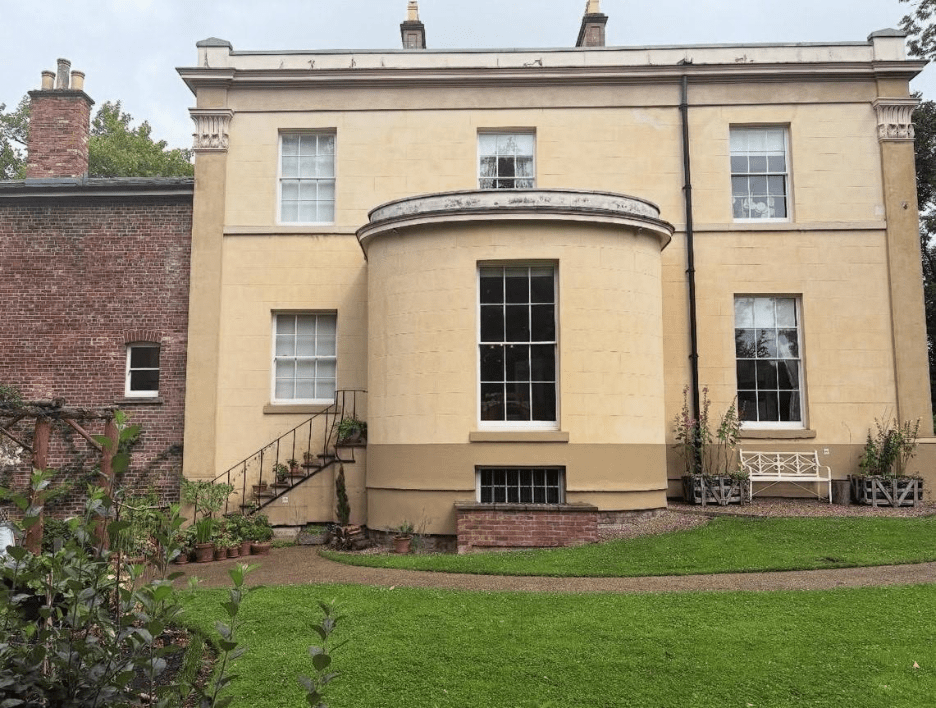
    The above quote is one of the many fascinating things displayed on the walls of this magnificent home. As a literature fan, Elizabeth Gaskell’s House was an easy first pick for me to kick off the 111 places challenge. A few months prior to this endeavor, I had visited the Gaskell memorial in Knutsford. (Knutsford is also well worth a visit – voted one of the best places to live in the Sunday Times (Jordan, B. Undated) and does also appear in the challenge.   
    The Gaskell House is a small museum in Manchester. Situated on Plymouth Grove, which is not too far from the centre but nicely enough tucked away to evade the large crowds. (I discovered that this problem is harder to evade on some of the 111 places I have visited since, and I am sure it will be a persistent one).   
    The building is one that the Gaskells had lived in and gives us a convincing portrayal of what life would have looked like in Victorian Manchester for someone of their class. The book informs us that not many items in the house were owned by the Gaskells, but that the items chosen and the colour schemes used to decorate the house were carefully selected to depict this period as accurately as possible. (Treuherz, J and Figueiredo P. 2024). Regardless, this property was one that was lived in by a very important author with a more interesting background and family than I had realised. It is a delightful experience to step into this picturesque home and imagine what life would have been like for the Gaskells.   

    Before I visited the house, I had read both North and South and Cranford. I am particularly fond of Cranford, but both are excellent. (On Goodreads, I gave Cranford a five and North and South a four, if you were interested to know.) After visiting the museum, I purchased Mary Barton and read this the following week. (Goodreads, four, Cranford is still the top). Her novels famously include themes of class, industrialisation, and gender – you will also hear about this at the museum, either from the written displays dotted around or from the guides, should you wish to hear from them. (More on this subsequently). But industrialism and novels cited as “social problem” novels were rife in the 19th century. Whilst these themes are prevalent in Elizabeth’s novels, there has been speculation surrounding how much of it she would have witnessed or been involved in herself. (Barton, A, and D, Duffy, 2020). My visit to this one has prompted me to read the rest of Elizabeth’s works and to reread North and South. I was bit younger when I read it and read Cranford in more recent years. My increase in admiration and interest in Gaskell I think, will make me appreciate Gaskell more. That, and my increase in maturity and knowledge. (I hope.) I do think being interested in literature and Gaskell does help make this an enjoyable experience, but it would be very easy to enjoy this place without any knowledge of Gaskell at all. The house itself is a delight to walk around, and it is interesting from a historical perspective to see how different things were.  There is a small but beautiful garden to peruse and a café/gift shop on the lower floor. Whilst I do believe that book lovers will be the biggest fans, Gaskell’s House offers enough intriguing history, aesthetically pleasing architecture, and an alluring garden to please the public. (I do think children would get bored, just send them to their grandparents.) Additionally, it’s not a big place, so it can be quite a short trip if you’re not like me and you don’t have to read everything and listen to all the guides.   

    I read some reviews of the museum after my visit (not before, which I understand is the norm, but I’m cool), and there was one thing that I thought might be a point of contention, and that is the enthusiastic guides. I will start by saying I was a fan, but I knew that it would be a bit much for some others. As I mentioned previously, it’s not a large museum and there was a guide situated in each room of the house as you went round, so it can seem overbearing if you want to have a more private walk around. To quote Gareth from a Google review, “They are very intense, and it is best to avoid engaging them in conversation or you might never get out.” I was pleased to see that most of the reviews were happy with the guides; however and it is worth noting that they do ask you if you would like them to tell you stuff or if you want them to leave you alone. I said I was happy with them to tell me stuff, and I was glad that I did. Even though I was a fan of Gaskell’s novels, I hadn’t delved much into her background or her family life, and it was great to learn more from people who were clearly passionate about the topics. My favourite was the very pleasant (slightly deaf – she informed me) lady in the study who told me lots of interesting stuff about Elizabeth’s husband, William, and utilitarianism. I knew next to nothing about some of this and began to feel like a Gaskell poser, but at least now I’m better equipped should a stranger in a pub quiz me on Gaskell. Sadly, this has yet to happen.   

    The Museum  

    I arrived before the museum was open (always keen). Arriving punctually at 10:45, fifteen minutes before doors open. This was a good decision, as I got to enjoy the garden by myself for a whole ten minutes before the next eager beavers arrived five minutes early. Perfect opportunity to snap some photos of the garden and the house for the obligatory Instagram post. Then I had a few moments to just stroll through the garden, admiring the pretty flowers and imagining I was a pretty belle in a Victorian novel… Just kidding..  
    The rain did pick up momentum, which did put a dampener on this perusal, so for the last few moments, I took shelter in the doorway outside the museum entrance. Alongside the two other guests who had by now appeared and spoiled my roleplay!   
    It was nice to watch the rain across the garden from the shelter. When I had finished in the museum, it was nice and bright again, so it was like enjoying the beautiful scenery across different seasons, each splendid in their own rights. This is Manchester, though, so temperamental weather isn’t anything peculiar.   

    I was trying to open the door at exactly 11:00 – the alleged opening times! It did not budge! Instant panic – is it not open today? But I paid 8 pounds!   
    They opened the door at approximately 11:01, completely disrespecting my punctuality!  
    When you go in, you enter the hall, and you can catch a glance of the study to your right and the morning room to your left. Straight down the hall is the dining room. The very amicable lady at the front desk told me and my new companions which way to go around the museum, and I purchased a guidebook of the house. Where possible, I intend to obtain some kind of memento from each of the 111 places. Sometimes this is not possible, as found out immediately in place number two. From Gaskell, I got this guidebook, which I convinced myself would be the sole item I would buy. However, as previously mentioned, I also purchased Mary Barton. That was it. Until I also got a bookmark and a postcard.   

    Room 1 – The Morning Room  

    The first room you go into is the morning room. A cosy little room which has some interesting displays. For example, a desk with some books encased behind glass, the main feature being a diary where you can read the two open pages. With a quill next to it – how fancy! I would recommend buying the guidebook; it tells you some interesting little facts. To be honest, it was the only reason I remembered it was called the morning room and not just the front room. I won’t reveal too much, not wanting to plagiarise, but an example from this room was called the morning room, as it faces south-east and may have been designed as a bright room to enjoy breakfast.   

    Room 2 – The Study  

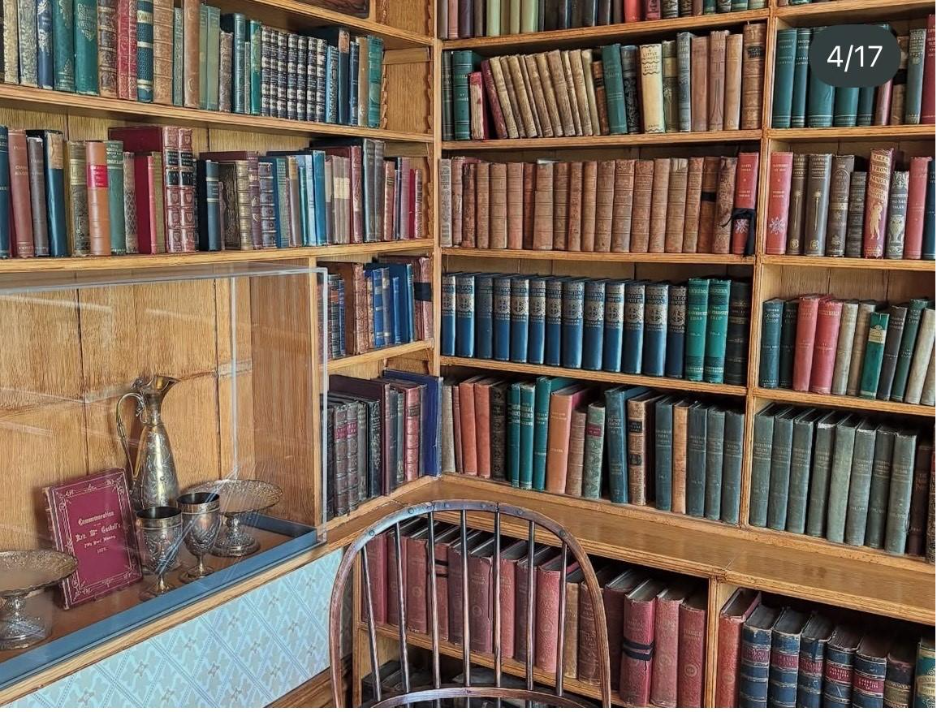
    The second room you go into is the study, which I have said was a particular favourite. As well as liking the guide and finding the information she gave me particularly interesting, this room was a bit of me. It was full of books! Which you are allowed to take off the shelf and have a look through at your leisure. There is also a little box which you can open, and it starts recounting some tale for you. Unfortunately, I did get caught up on the conversation with the guide and did not really pay much attention to this. Maybe on a revisit. I would love a room like this in my house. One day.  

    Room 3 – The Drawing Room  

    Next, you go into the Drawing room. The guidebook states that this was the “main entertaining room” in the house. A quaint little room. Knowing Gaskell herself was so infatuated with having her study adds to the glee of walking around this room, but I would say this was the least magnificent of the rooms. Maybe I found less joy in this one because this was the only room where I didn’t interact with the guide. She was already mid-conversation with a couple who were either rushing through the house or had gone against the recommended way around because I was the first one in. (Naughty!)  

    Room 5 – The Dining Room   

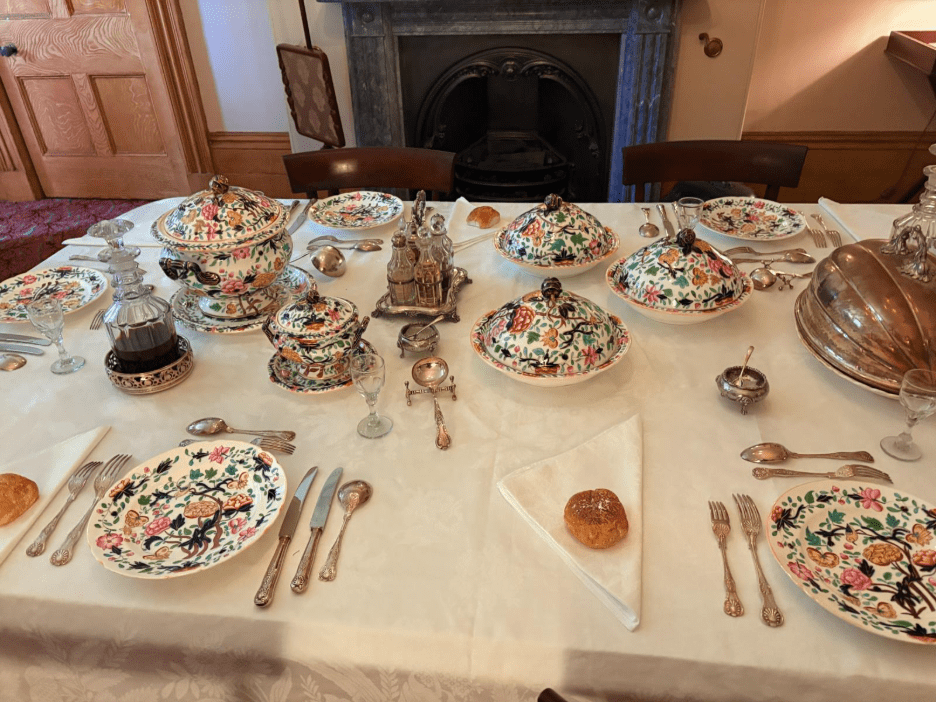
    Moving on to the dining room. If you are like me, you will be imagining yourself in an old Victorian drama, sitting around the table discussing some scandalous affairs. This is a great room for some immersive imagination; you should have seen the scene I was involved in!…   
    The tour told me this was the room that they would have had the piano in. It is not a small room, but there is a lot already here, so it is difficult to picture a big piano in here too. Apparently, the table extended too. I guess when needs must! I would have just put up a TV myself.   
    The dining room is well placed and there is a big window with a spectacular view of the garden. We were informed that this is where Gaskell did a lot of her writing, and it is believable that she did it here. If I had brought my laptop with me, I would have whipped it out and written this by the window, too!   

    Room 6 – Hallway & The Guest Room (Bronte Room)  

    After the dining room, you are back in the hall, but now you will be at the foot of the staircase. You can admire the small portraits and the altarpiece more closely. There is a small table and chair at the top, which I found peculiar.   
    When you get upstairs, there is the “Bronte Room’ which was originally the guest room. The guidebook and information littered around the museum mention Gaskell and her friendship with Charlotte Brontë. Adds a greater appeal for literary fans, not a bold claim to say that the Brontës are more popular than Gaskell. Anne is my favourite, though. (Acton Bell, because I’m an intellectual). This room was interesting, but it felt less like stepping to a Victorian home and really let you know that this was a museum. Some very interesting bits to read, but not as visually stunning as the other rooms.   
     

    Room 7 – The Bedroom  

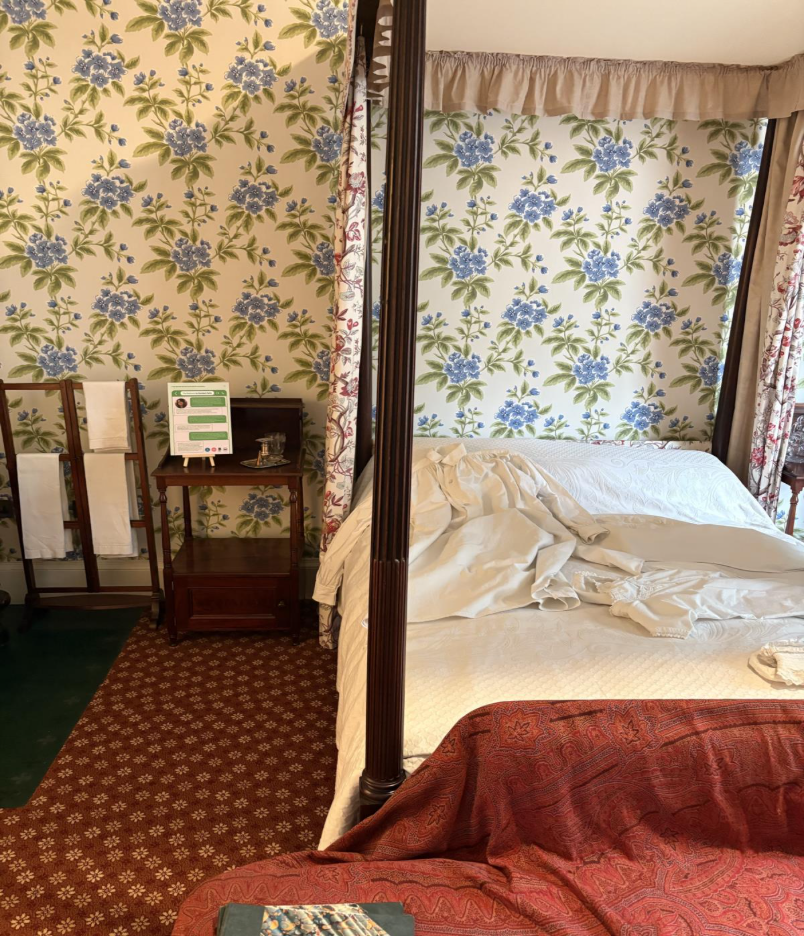
    The bedroom was my next favourite room after the study. If there were just a full bookcase somewhere in the room, this could have been the winner. The tour guide told me a lot about this room and some background on how proud Elizabeth was of her bedroom and how important it was to her that it be nicely decorated. The story goes that Gaskell had gone to visit another lady’s home and was flabbergasted that her bedroom was so plain! In this room, you can also see some of Gaskell’s wedding attire, which is locked away so you can’t touch it, but magnificent to view. One of the smaller rooms in the house but has a more personal feel and interesting history. The tour guide was engaging and enthusiastic in this room too. I ended up staying in the room longer than I would have to listen because she was engaging.   
     

    End of the Tour & Overall Rating  

    After this, you can find some more bits of information displayed on the walls. (The quote at the top of this article is taken from these walls.) Then you go down to the basement. A little shop and a cafe. This is where I bought Mary Barton, and I also purchased a bookmark and a postcard. For each of these places I visit, where possible, I do try to get a little memento. Sometimes, it is not possible, so I make up for it by buying multiple at times like these.   

    I have decided to do a ranking system, and, full disclosure, I took this idea from the 1001 album club, which is a great podcast! For each one, I’ll do a rating of POSITIVE, NEUTRAL, or NEGATIVE.  
    Gaskell’s House was a great way to start off the challenge and a place I intend to revisit. My ticket lasts me the year, and they told me they do book sales on some Sundays. Lots of good information to absorb and some visually pleasing sights. Not a difficult one to rate.   

    RATING – POSITIVE.  

    See my Gaskell Instagram post @Dickinson95 

    References 

    1. Barton, A and D, Duffy, (2020). Elizabeth Gaskell and the Industrial Poor. The Gaskell Journal. Vol 34. Available at: https://www.jstor.org/stable/48634415?read-now=1&seq=6#page_scan_tab_contents. Accessed 26/10/2025. 
    1. Jordan, B, Undated). Sunday Times lists Knutsford as one of UK’s best places to live. Available at: https://www.knutsfordguardian.co.uk/news/25024043.sunday-times-lists-knutsford-one-uks-best-places-live/ Accessed 26/10/2025.  
    1. Treuherz, J and Figueredo P. (2024) 111 Places in Manchester That You Shouldn’t Miss.” Edition 4,